
🎤 Your AI pronunciation coach
Fix Your
Chinese Pronunciation
Get a personal learning plan and a set of exercises in one minute!
- 1Press the microphone and read the five example words aloud.
- 2Get AI feedback on your pronunciation and tones.
- 3Practice with exercises that help you work on your pronunciation mistakes. Free, no sign-up needed.
We don’t store your voice recordings.
Made by someone who learned Chinese as an adult
Why I created SayMandarin
My name is Tony. I graduated from Beijing Language and Culture University. I’ve been teaching Chinese since 2015 and have worked at several Chinese companies.
After graduating from university, I left China and now work in another country. There are no native Chinese speakers around me, and I have little time for Chinese lessons with a teacher. A couple of months ago, I noticed that my Chinese pronunciation was getting worse because I wasn’t getting enough practice or feedback from native speakers.
My students had the same problem: they practiced a lot, but no one could give them feedback and assess how well they were pronouncing Chinese tones. Chinese friends are usually too polite to correct foreigners’ pronunciation, and lessons with a teacher aren’t always convenient.
So I created SayMandarin: a tool that already helps me and my students easily practice Chinese pronunciation and tones. Now it’s available to everyone, and I hope it can help you too.

Why my method works
You’ll get
Detailed feedback from your personal AI coach, who helps you improve your Chinese pronunciation and tones every day
SayMandarin doesn’t just rate your pronunciation. It explains where you made a mistake and how to say it correctly. It picks exercises and guides for you based on your specific situation.
01
We give you a plan, not just a score
Two or three learning tips based on the sounds and tones you had the most trouble with. Many of the tips include direct links to guides with detailed explanations of the theory and tools for practice (this section is constantly updated).
Your plan
- Fix sh → s. It slipped on 2 words. zh, ch, sh: how to pull the tongue back →
- Tone 3 keeps coming out as 2. Train your tones in pairs, 20 minutes a day →
- Then say it inside a whole sentence. Practice reading sentences out loud →
02
Tips on how to fix a sound
We don’t just show you the mistake. Most sound errors come with a short tip on what to do with your tongue, lips, or breath.
Lift the tip of your tongue a little higher and further back. Aim just behind the ridge above your top teeth. No need to curl it.
03
A small daily habit
Your plan works best with a little practice each day. About 10 minutes on tones and sounds, plus a guide now and then, can help you see progress sooner.
More useful resources
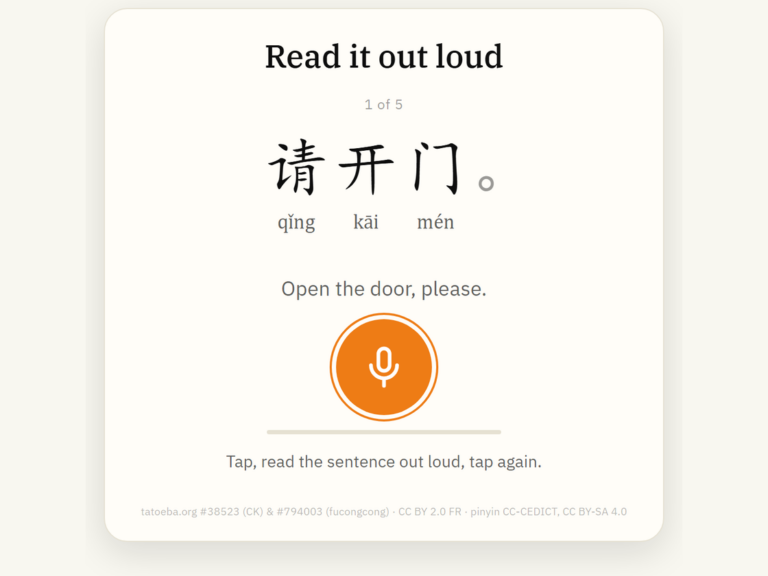
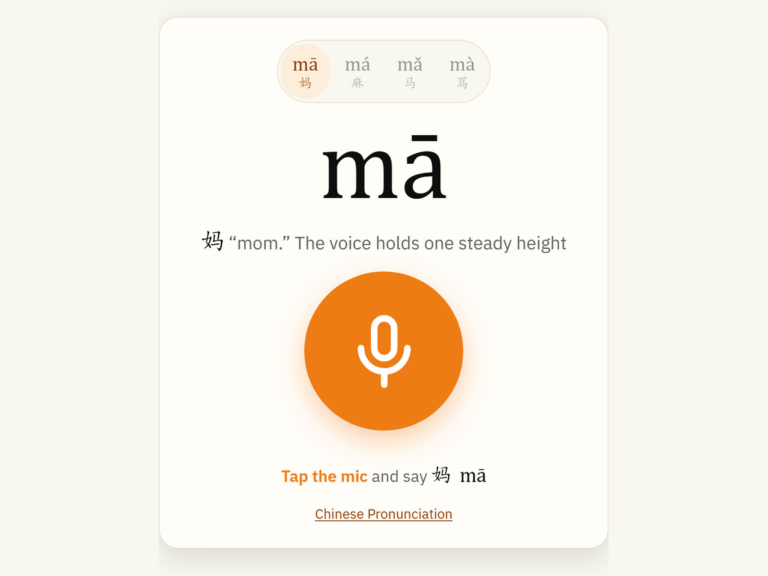
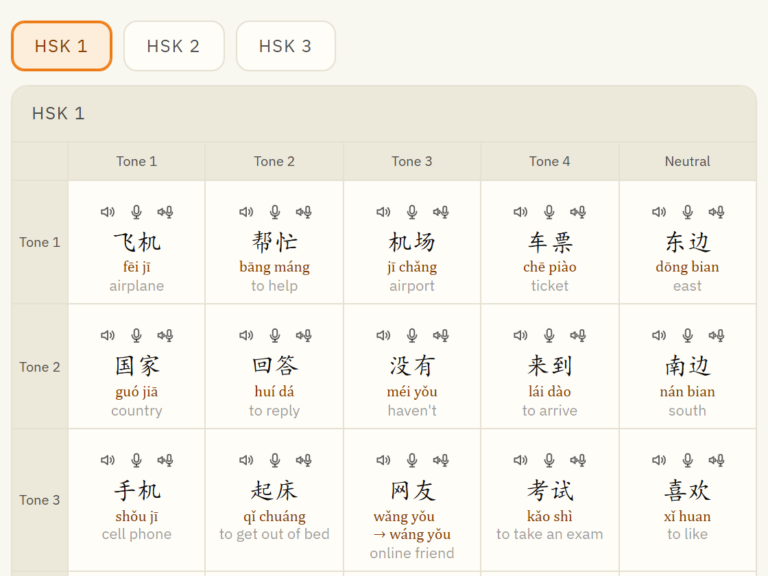
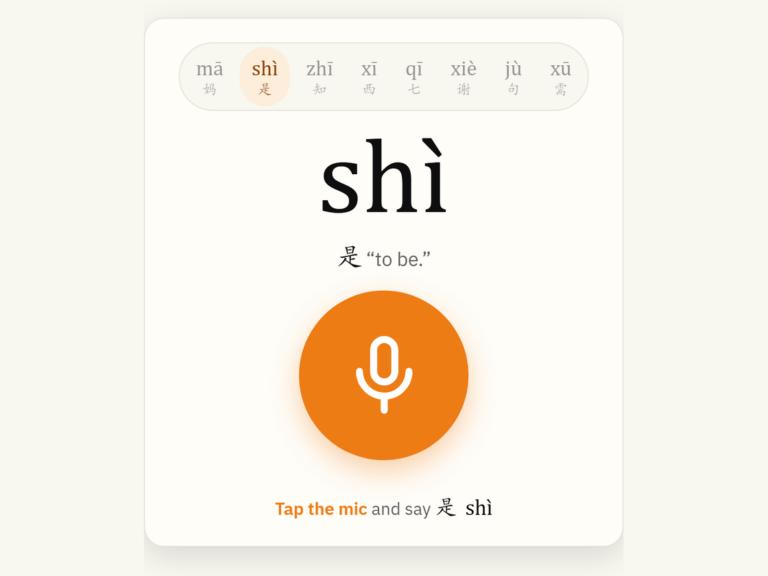
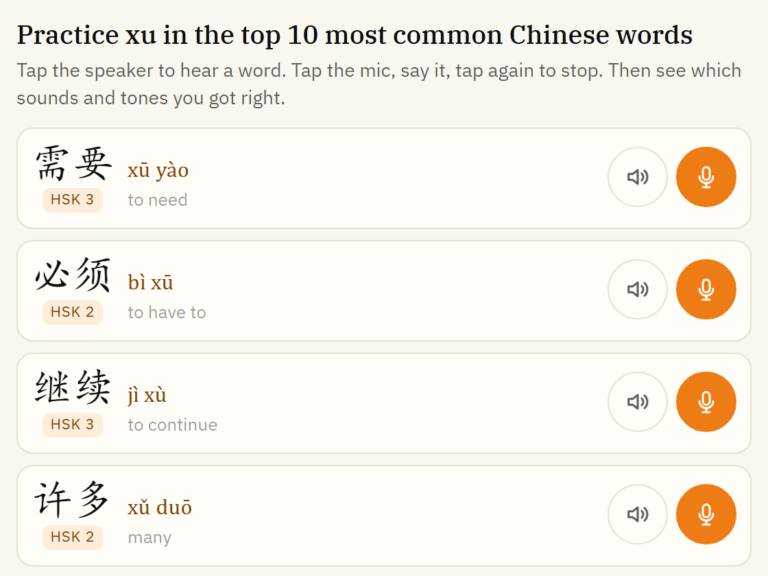
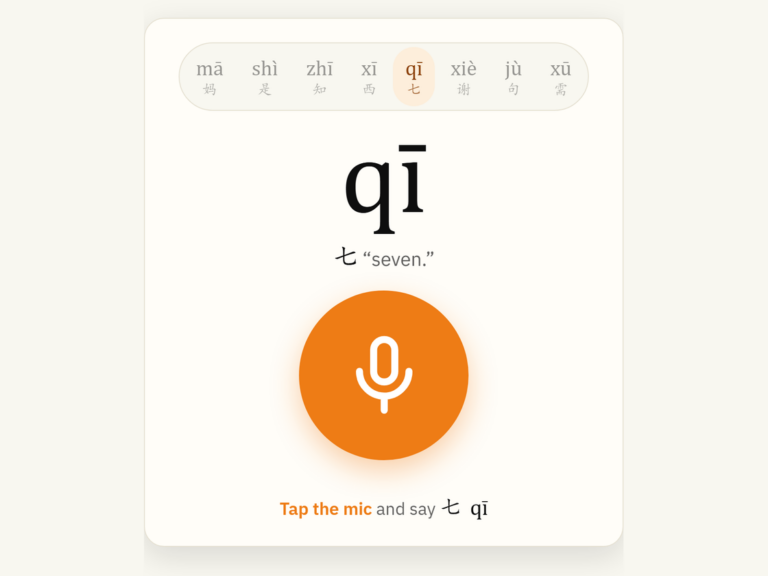
More guides: Chinese tones Mandarin pronunciation
The tools on this site will be especially useful to you if:
- You studied Chinese for a while, then spoke to a Chinese person for the first time, and they didn’t understand you or kept asking you to repeat yourself. It was unpleasant, and you don’t want it to happen again.
- You’re learning Chinese on your own and don’t always know where to go next. You don’t always have time for lessons with a teacher, but you need ongoing pronunciation checks and regular practice of Chinese sounds and tones, with feedback.
- You’re studying Chinese at a university (in your own country or in China). You don’t always get enough attention from your teacher in class, and you want to improve your pronunciation to do well on exams and stand out among your classmates.
- You’re preparing for the HSKK speaking test and worry that you haven’t had much practice yet and your pronunciation isn’t good enough. You’re using outdated practice tools that don’t give you feedback.
Frequently asked questions
- What is SayMandarin?
SayMandarin is a free tool for checking and practicing your Chinese pronunciation and tones. It has built-in feedback from an advanced AI system. SayMandarin doesn’t just give scores. It gives detailed feedback on how to improve your pronunciation.
- How many times a day can I check my pronunciation?
30 times a day. Each press of the microphone button counts as one check. A five-word session counts as five checks. The counter resets every day at midnight UTC. The “Practice the four tones” trainer has no limits. You can use it even after your 30 checks are used up.
- Do I need a separate microphone to use SayMandarin?
No, the built-in microphone on your computer or phone is enough.
- Does SayMandarin work on my phone?
Yes, it works right in your browser. Open the site on your phone, tap the microphone, and start learning. You don’t need to install a separate app.
- How are you different from apps that give a score?
We don’t give one overall score. We give you a plan. The breakdown shows what we heard in each syllable, sound, and tone, and ends with two or three steps based on your mistakes. Most steps have a link to an exercise or guide.
- I’ve checked my pronunciation. What do I do next?
Follow the plan at the end of the breakdown. It has two or three steps on the sounds and tones you didn’t get right, and most have a link to a guide or exercise. If there are no mistakes, the plan will suggest reading whole sentences aloud.
- My browser is asking for microphone access. Is that safe?
Yes. The browser asks for permission so the site can hear you when you click the microphone. You can turn off access at any time in your browser settings.
- I’m a complete beginner. Is it too early for me?
Just the opposite: this is the best time. It’s critical to build your pronunciation foundation at the start, because relearning later will be very painful.
- Where does my voice go? Do you store the recording?
The microphone turns on only after you click the button. In the “Practice the four tones” trainer, your voice is analyzed right in your browser and never leaves it. For all other checks, the recording and the text you were supposed to say are sent through our server to our partner, who returns the result. We don’t store recordings.